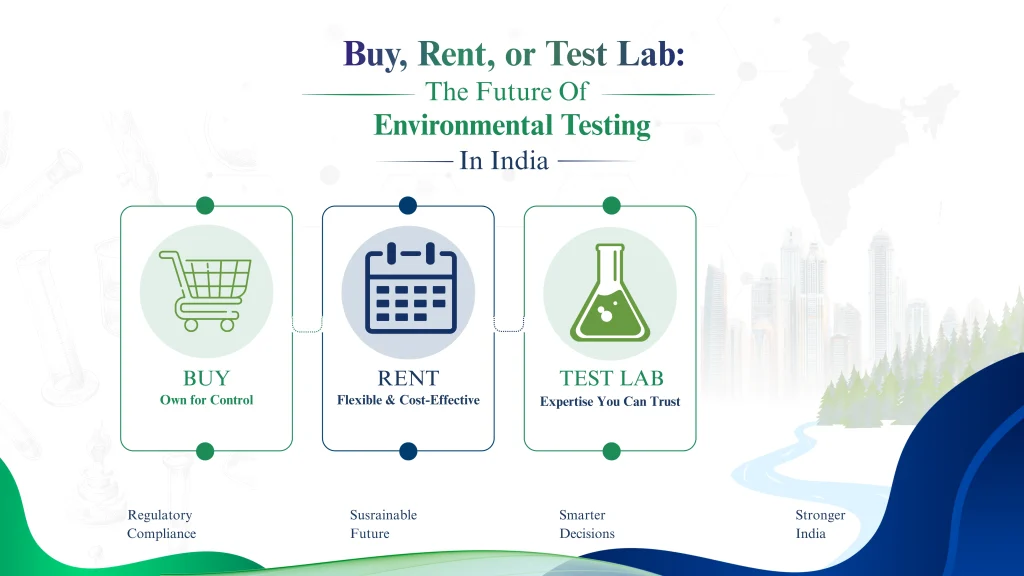
Recently, startups and manufacturing companies have been growing and facing the decision either to buy or lease an environmental testing chamber. Some of the companies are trying to outsource the testing from the removed laboratories. There are pros and cons for each choice based on the space availability, financial capacity, frequency of testing, and other such considerations.
Why Environment Testing is Crucial for Product Reliability:
The main purpose of an environmental test chamber is to recreate environmental conditions such as humidity, temperature, dust, vibration, and salty water spray. These conditions enable companies to overcome the faults well ahead of time in order to be more confident that their product will function properly in different environmental conditions.
If these conditions weren’t created, then there could have been a huge loss worth millions or even billions due to product failure, which leads to loss of customer trust and penalties. Testing leads to improved compliance (IEC 60068, ASTM), decreased claims by 30-50%, faster time-to-market, and, most importantly, plays a crucial role in the success of “Make in India.”
The Three Common Ways Companies Handle Environmental Testing:
The company makes a decision of buying or taking an environmental chamber on lease based on the frequency of testing, timeline, technical ability, budget, and volume of testing. Each of these solutions caters to certain requirements.
Renting an Environmental Test Chamber:
- It allows you to avoid high initial costs and machine setup.
- Useful for doing only short assignments or trial testings.
- Long-term storage is not necessary; you can dispose of them.
- After some time it will prove more expensive than buying in the long run.
Buying an Environmental Test Chamber:
- Buying a chamber implies eternal ownership along with complete customization.
- No need to wait for testing a product.
- Answerable to mechanical maintenance, electrical supply, calibration, and personal training.
Using a Third-party Lab:
- Labs operate on a pay-per-test or pay-per-day basis without any requirement for equipment.
- Have access to specialized equipment, including vibration shakers and altitude chambers.
- Time management may cause delays in critical tasks.
When Renting an Environmental Chamber Makes More Sense:
It is when the performance of the product tests is low (less than 50 tests annually), and the cost savings involved in this can reach up to 70%.
1. Short-term testing products: Leasing would be a good choice for short-term testing programs, such as water ingress protection tests for monsoons. By doing this, the business would have access to the testing chamber during validation but could return it once testing is complete.
2. Startups and budget-conscious teams: This helps startups and growing organizations to have necessary testing without making high investments. Renting environmental chambers enables them to save money for other aspects of their business.
3. Prototype and proof-of-concept testing: By renting, businesses can perform prototyping and prototype testing without having invested further or chosen a system with greater capacity.
4. When you want to avoid the maintenance and calibration, companies that rent testing chambers usually take ownership of maintenance and calibration. This helps customers concentrate on other things, such as testing and development.
When Buying a Test Chamber, Is It a Better Investment?
1. Frequent or daily testing needs: labs/companies with testing that is constant or occurs frequently will have the advantage of having a chamber that will allow for testing at shorter intervals and without disruption to their operations.
2. Long-term testing programs: Having any research and development projects in the fields of EV, aerospace, and product durability, buying an environmental test chamber will provide you with a strategic advantage.
3. Need for customized testing conditions: Organizations that frequently require unique environment testing conditions, such as altitude simulation, vibration analysis, or product-specific evaluation, will benefit much more from owning a test chamber.
4. Better control over testing schedules: It prevents labs/companies from relying on external factors and allows the team to conduct tests whenever they require.
When a Testing Lab is the Smart Choice:
Labs offer the best fit when it comes to testing specialized environmental chambers instead of purchasing them.
1. Compliance and certification testing: Test labs are the best choice for the company that needs to ensure testing compliance and certification.
2. Lack of internal testing expertise: Testing your product in a lab makes it more trusted due to the access to the experts who can handle all the intricacies of the testing process.
3. One-time or specialized testing needs: Outsourcing a lab will definitely be more effective than having the testing equipment.
4. Tight project timelines: Testing laboratories have all types of chambers, which are required for testing a product and have the flexibility to meet the deadlines.
How to Decide between Rental, Buying, and Testing Labs:
1. Frequency of Testing: If short-term or occasional testing of a product is needed, then renting or using a testing lab is more beneficial than buying a new chamber. If it’s required for continuous, long-term, and daily testing, then purchasing a new chamber is a better option.
2. Budget Considerations: For an organization, if the initial investment in the chamber is considered high, then they may prefer rentals or testing laboratories. While organizations with long-term testing plans may benefit more from ownership.
3. Compliance Requirements: For a product, if testing compliance and certifications are required, they can prefer certified testing laboratories.
4. Evaluate long-term ROI: compare the long-term cost of renting versus owning based on how frequently your product is being tested, its operational requirements, and expected project duration.
5. Consider a Hybrid Approach: Many organizations will prefer all three options based on the product, testing frequency, and testing compliance, whichever is ideal for organizations at that time.
Beyond Equipment Price: Hidden Testing Costs to Consider
1. Maintenance and Calibration: If the organization is buying a new chamber, then the cost of calibration and servicing is owned by the organization, but in a lease and laboratory testing it’s on the organization that has the facility.
2. Energy Consumption: The test chambers utilize a larger amount of energy, practically when it comes to high-volume chambers, thus incurring recurrent expenses more than expected.
3. Training and Floor Space: Owning a test chamber will force the organization to have a qualified technician and allocate the proper floor space and consider ventilation and service space in the future.
4. Downtime and Repair Issues: If an environmental chamber breaks down, then it can affect the schedule of testing if any organization is owing ownership of the chamber, but in the rental or labs it will be much smoother and faster.
5. Insurance and Depreciation: There is an aspect of maintenance cost such as insurance and depreciation for equipment purchased outright.
How Envisys Technologies supports Different Environmental Testing Needs:
Founded in 2014 and based in Bengaluru, envisys technologies support a wide range of environmental testing requirements through a complete testing ecosystem cut under “Make in India.”
The company offers flexible rental solutions, environmental test chamber sales, and NABL-accredited testing lab services covering temperature, humidity, dust, vibration, and other reliability testing applications. Its solution caters to industries including automotive, EV, electronics, aerospace, and product reliability testing.
With operations across locations, such as Pune, Faridabad, and Hyderabad, along with global exports, the company provides nationwide support for testing and validation needs.
Additional services include customized rental options, equipment upgrades, refurbishment support, buyback programs, and after-sales AMC service to help maintain high operational reliability and testing uptime.
Final Thoughts: The Right Choice Depends on your Testing Goals:
Everything is dependent on the testing frequency of the product, the cost involved, and the nature of testing, and the best option could be any of three (buying, rental, or laboratory use).
Selecting a chamber as per testing requirements or methodology will lead to cost savings and proper testing of the product. Envisys Technologies offers various environmental testing options, which include rentals, equipment purchases, and testing from NABL-accredited laboratories.
FAQs
1. Is it better to rent or buy an environmental test chamber?
Renting is usually suitable for short-term, low-volume, or temporary testing needs, while buying is more beneficial for frequent, long-term, and continuous testing operations. Many organizations prefer a hybrid approach based on the product test/validation.
2. When should a company rent an environmental chamber?
Renting is most suitable for prototype testing of a product, startup projects, on-demand-based testing, and temporary validation programs where the business wants to be flexible without long-term investments.
3. What is the advantage of buying an environmental test chamber?
Owning a chamber will provide greater control over usage of the chamber, customization options as needed, faster product development cycles, and long-term operational value for regular testing activities.
4. When should a company use a testing lab instead of buying equipment?
Testing labs are the most preferred choice for compliance testing, certification requirements, specialized testing applications, or when in-house expertise and infrastructure are not available.
5. Which industries commonly use environmental testing labs?
Industries like automotive and EV, electronics, aerospace, pharmaceuticals, defense, and manufacturing rely majorly on focused environmental testing labs for product validation and reliability testing.

