Environmental Testing is done to ensure product reliability and compliance to test standards under conditions of extreme temperature, relative humidity, corrosion, ingress, altitude, solar radiation, vibration etc., In India, the testing compliance and adoption has accelerated with the growth of automotive (EV), electronics, defence/aerospace, healthcare etc., industries. Yet user competence in selecting, operating, and maintaining environmental test chambers remains inconsistent. Unlike HVAC or mainstream mechanical testing, environmental testing involving various test requirements lack widespread training pathways.
This study, based on the survey of 55 respondents, quantifies knowledge gaps across industries and roles, identifying areas for structured intervention.
METHODOLOGY
- Industries Covered: Automotive/EV, Aerospace/Defence, Electronics/Semiconductors, Healthcare/Medical Devices, Materials/Metals/Plastics.
- Respondent Roles: Operators, Testing Engineers, Lab Managers, Procurement
- Instrument: 10 Questions Structured Questionnaire (Google Form).
- Analysis: Descriptive Statistics and Interpretation of Pain
RESULTS
- Industries Covered: Automotive/EV, Aerospace/Defence, Electronics/Semiconductors, Healthcare/Medical Devices, Materials/Metals/Plastics.
- Respondent Roles: Operators, Testing Engineers, Lab Managers, Procurement
- Instrument: 10 Questions Structured Questionnaire (Google Form).
- Analysis: Descriptive Statistics and Interpretation of Pain
RESPONDENT ROLES
Most responses came from Testing/Quality Engineers (18) and Lab Managers (17), followed by Procurement Staff (8) and Operators (3). This indicates the survey reached decision makers and technical influencers rather than only operators.

RESPONDENT ROLES
The sample was broad:
Automotive/EV (17), Aerospace/Defence (16), Electronics/Semiconductors (8), Materials/Plastics (5) and Healthcare/Medical Devices (3)

INDUSTRY REPRESENTATION
Confidence in selecting the right chamber was mixed. While 22 respondents rated themselves ‘Moderate’ and 20 ‘High’ there were still 3 with low confidence. This indicates many users rely on vendor guidance

TEST STANDARDS FAMILIARITY & TRAINING
- Test Standards knowledge (IEC, ASTM, MIL, BIS, JSS/JIS) was concentrated at Moderate to High levels, but very few experts.
- Majority of the respondents had no formal training in environmental testing. Structured exposure remains scarce across industries
![Standards Familiarity [Respondents vs Familiarity Level]](https://envisystech.com/wp-content/uploads/2026/01/Standards-Familiarity-Respondents-vs-Familiarity-Level.webp)
OPERATION & MAINTENANCE CONFIDENCE
Responses revealed that the most users rated themselves as having moderate to high confidence in day-to-day test chamber operation and maintenance. However, a small group expressed low-confidence, indicating uneven competence across the user base. This suggests that while routine use is understood, deeper preventive maintenance and troubleshooting knowledge remains limited.
![Standards Familiarity [Count vs Confidence]](https://envisystech.com/wp-content/uploads/2026/01/Standards-Familiarity-Count-vs-Confidence-1024x529.webp)
TRAINING RECEIVED
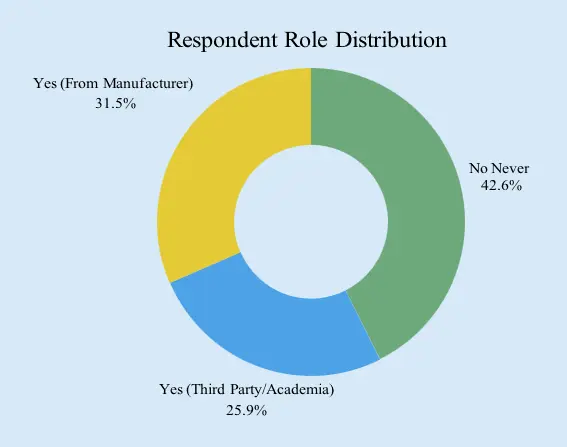
A significant finding was that majority of respondents reported never having received a formal training on environmental testing. A smaller share had received training from manufacturers, and only a few from third-party or academic providers. This gap highlights the lack of structured skill-building pathways for environmental testing engineers in India.
PAIN POINTS:
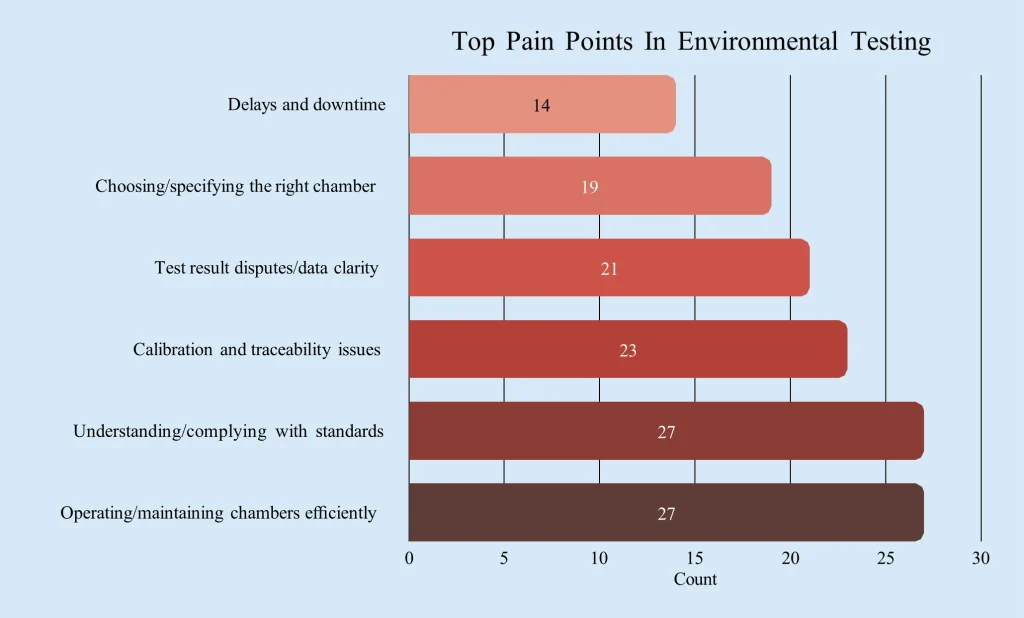
Key gaps identified:
- Difficulty in choosing/specifying the right test
- Limited test standards
- Inefficient operation &
- Calibration & traceability challenges.
- Test result disputes and downtime.
TEST STANDARDS FAMILIARITY & TRAINING
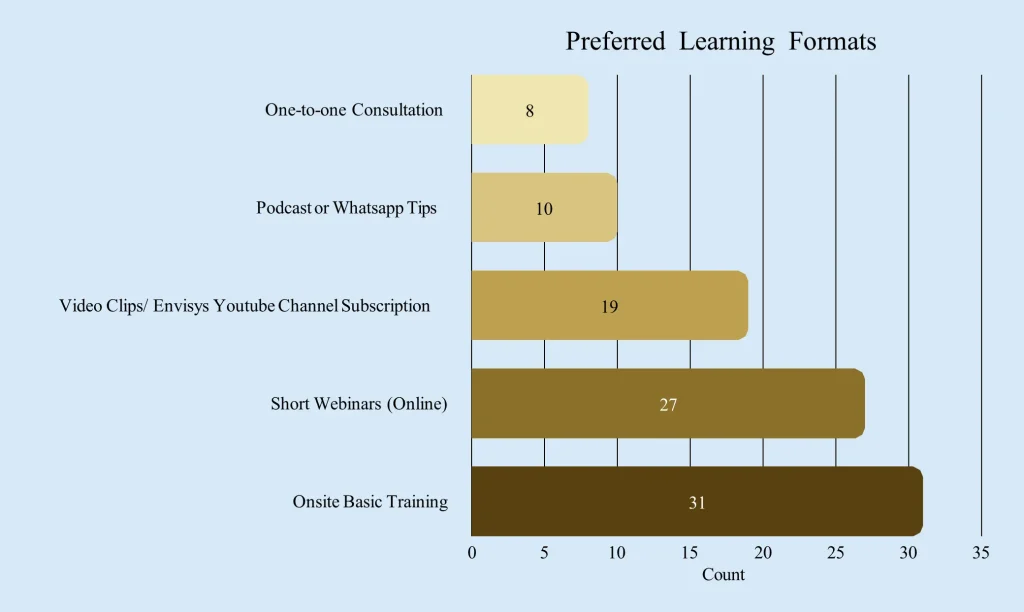
- Top choices: Online webinars and step-by-step
- Onsite training preferred in Aerospace/Defense.
- English was the dominant language, but some demand existed for regional languages.
DISCUSSION
The survey confirms a systematic knowledge gap across domains of test chamber specification, test standards literacy, and operation. While users are moderately confident, the absence of structured training amplifies risks of misapplication, downtime, and non-compliance.
Manufactured-led Interventions:
- Free consultation
- Webinars on test chamber selection and test standards
- Practical checklists and buyer’s
- Operator-level certification
This dual approach of education + marketing builds both user competence and manufacturer though leadership.
IMPLICATIONS
- For Users: Structured training and checklists to improve test planning and
- For Manufacturers (e.g., Envisys Technologies): Opportunity to act as an educational partner, strengthen trust, and gain AEO/GEO authority.
- For Academia: Need to embed environmental testing into curricula, in collaboration with industry.|
LIMITATIONS
- Small sample size (55) limits
- Reliance on self-reported confidence may include
- Cross-sectional design captures a snapshot, not longitudinal
CONCLUSION
The findings highlight gaps in user knowledge and training in environmental testing in India. While moderate confidence exists, formal training and standards literacy remain underdeveloped. Structured, vendor-neutral education led by manufacturers can significantly improve user competence, strengthen compliance and build industry trust.

